For Homes
The whole roof is inspected after a storm, photos are shown, and what needs fixing is described in a written scope.
- Missing shingles after wind
- Hail hits on a slope
- Ceiling stains after rain
Storm damage roof repair Urbandale homeowners need after hail, wind, or falling debris starts with inspection and documentation. This hub page covers wind damage, hail damage, and debris damage together: lifted and creased shingles, bruised mats, bent flashing, and punctured decking, with photos and measurements recorded before repair work is scoped.
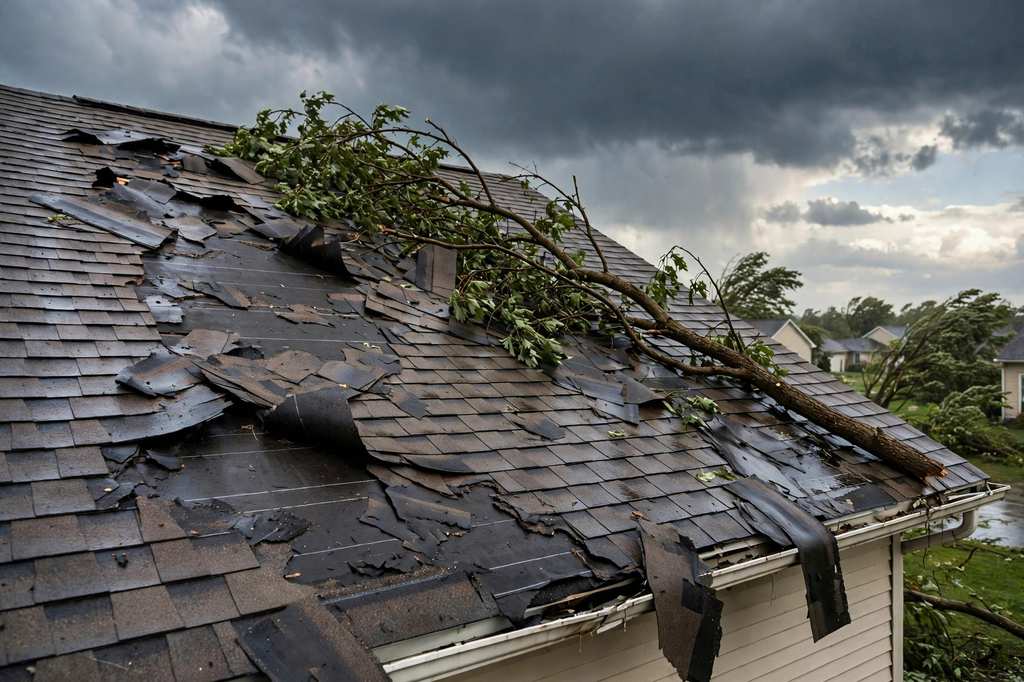 Full roof inspectionTemporary coverPhoto documentation
A storm repair starts with a full inspection and ends with a clean job site. The scope below describes what is inspected and repaired, and what is handled as a separate scope when the storm took more than the shingles.
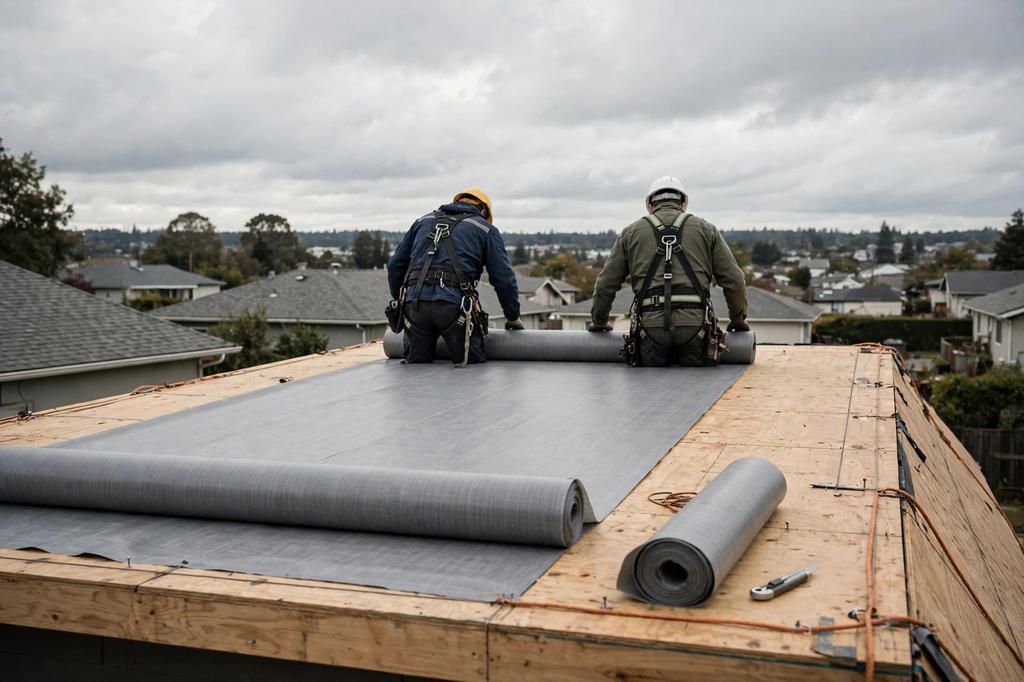
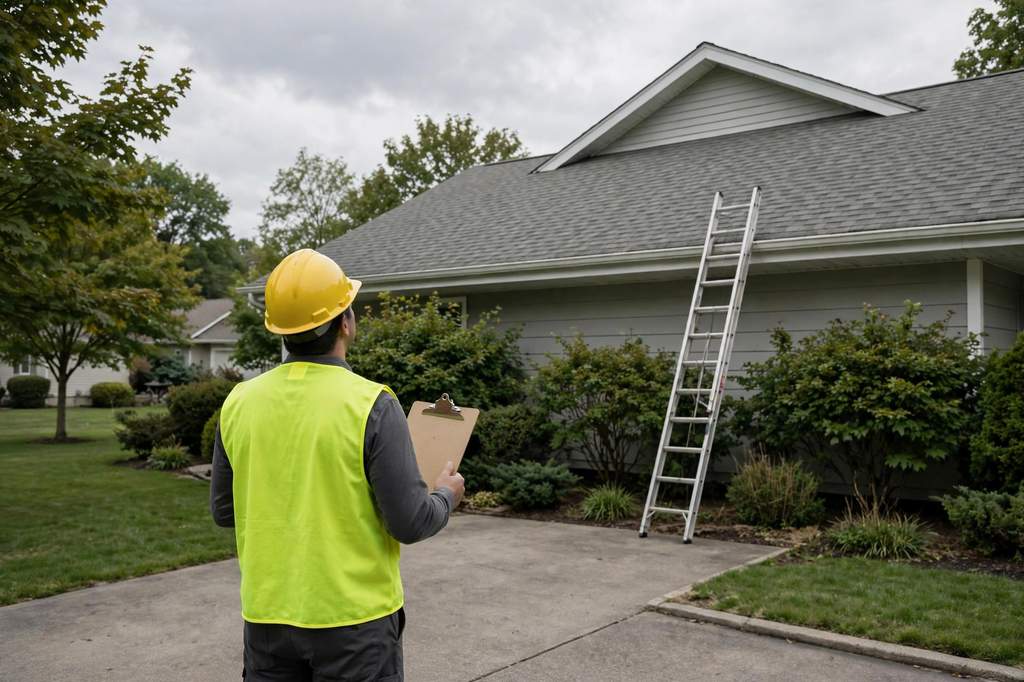
Every slope is walked, the flashing and penetrations are checked, and a moisture meter runs across the decking. Photos record everything found, not just the obvious damage.
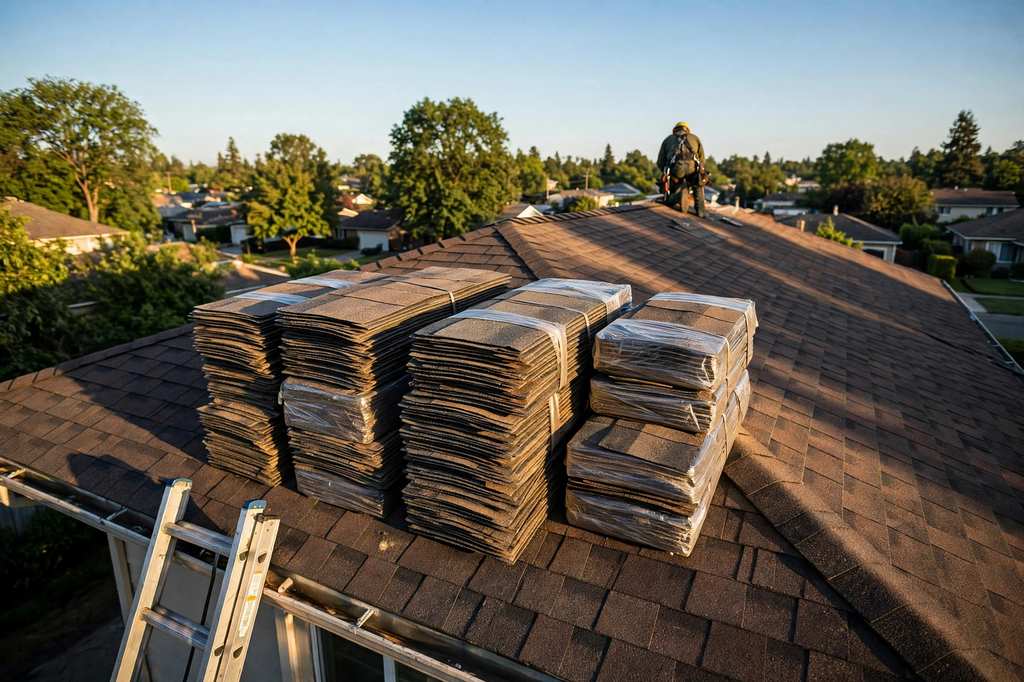
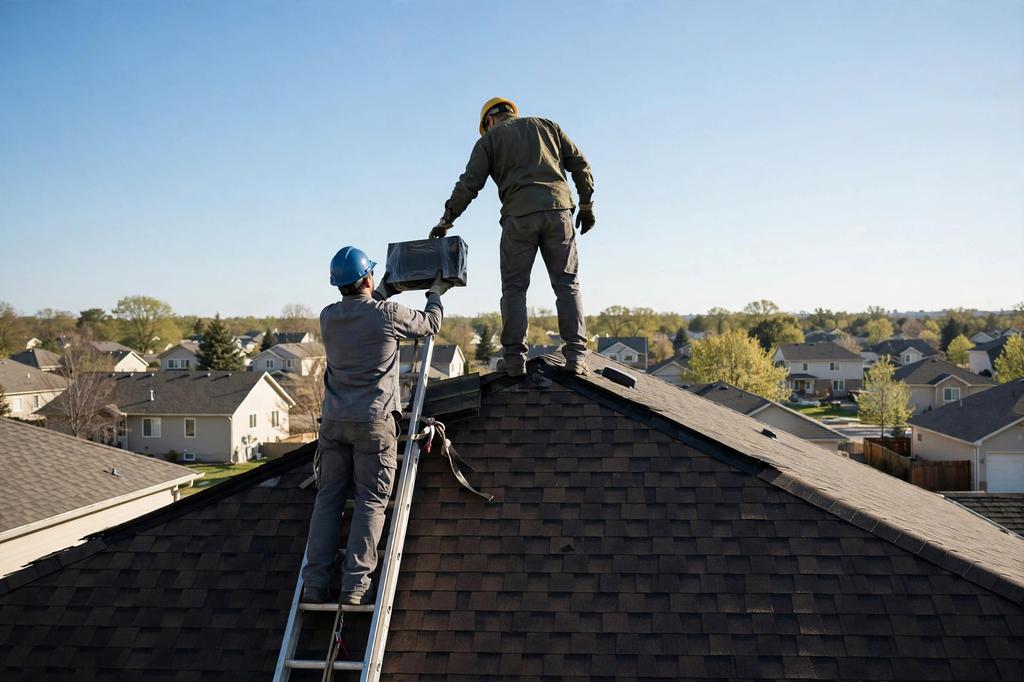
Damaged shingles are removed, the underlayment beneath is checked, and new shingles are installed. Nails are set to the manufacturer pattern so the repair holds.
Soft or damaged decking is cut out and replaced before new shingles go down. The attic side is checked too, so the repair is known from both directions.
Bent flashing, cracked pipe boots, and damaged ridge vents are replaced or resealed. These are the spots that leak first after a storm, so all of them are checked.
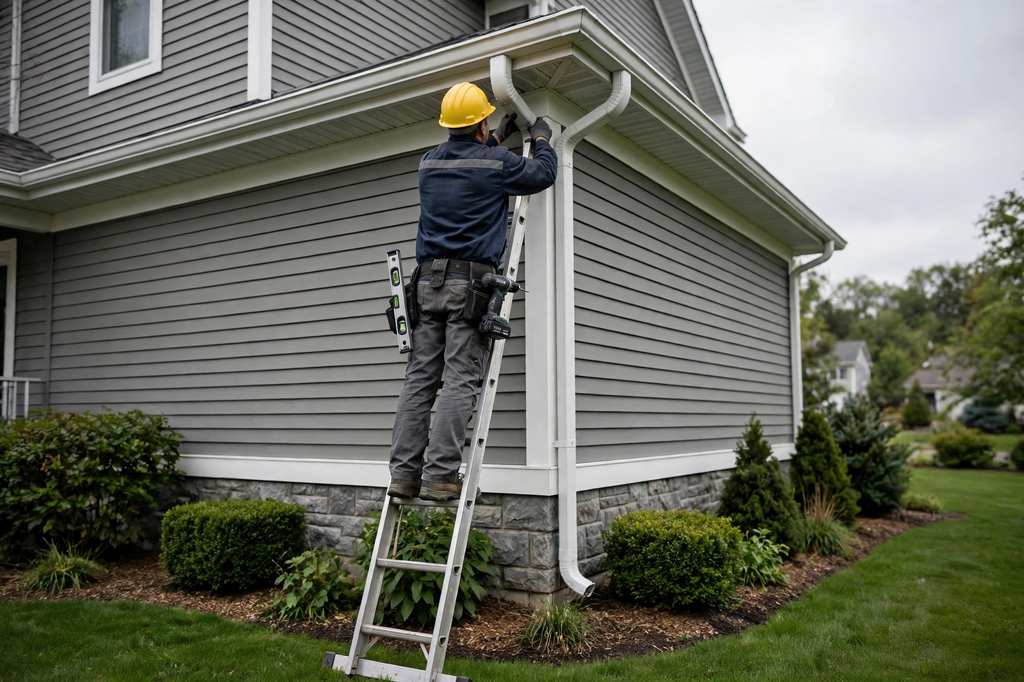
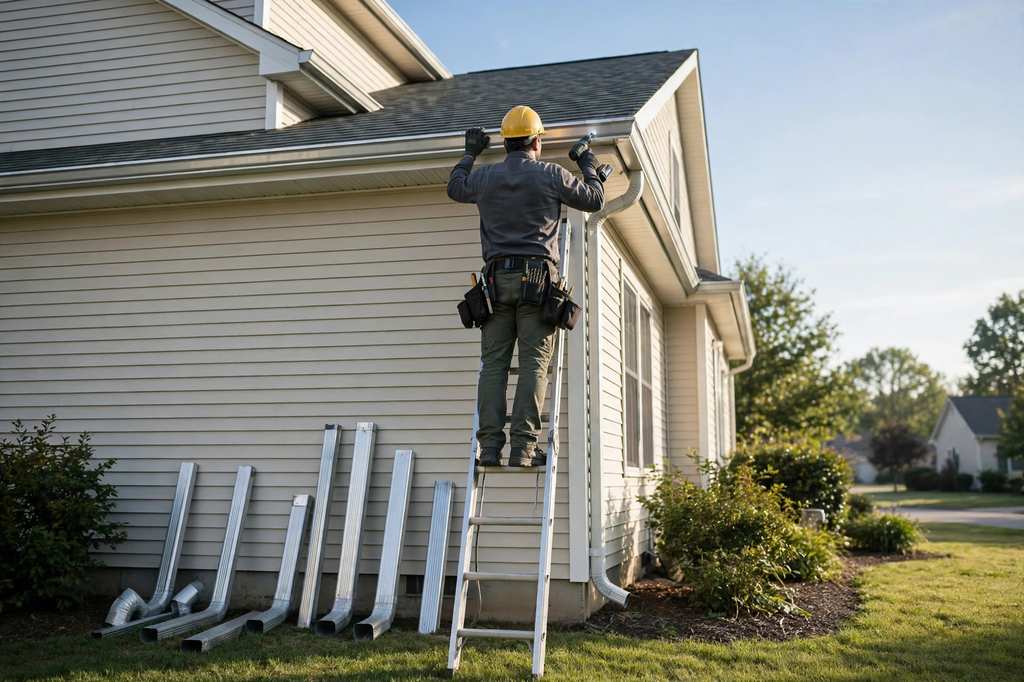
Gutters and downspouts are checked for storm damage and granule buildup. A bent or loose section is repaired or replaced so water drains away from the house.
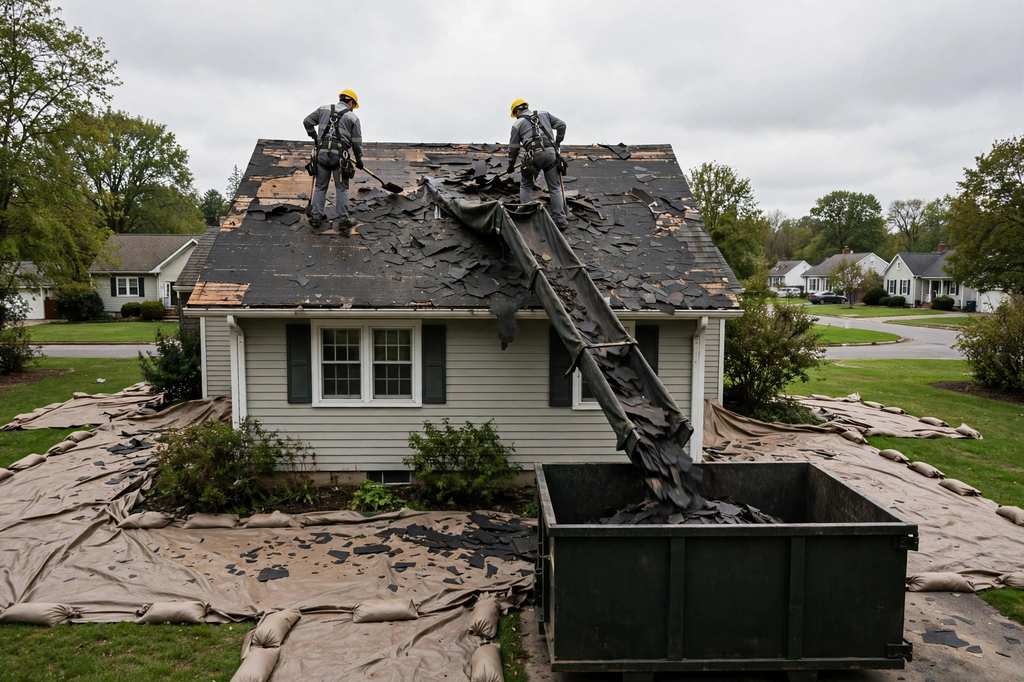
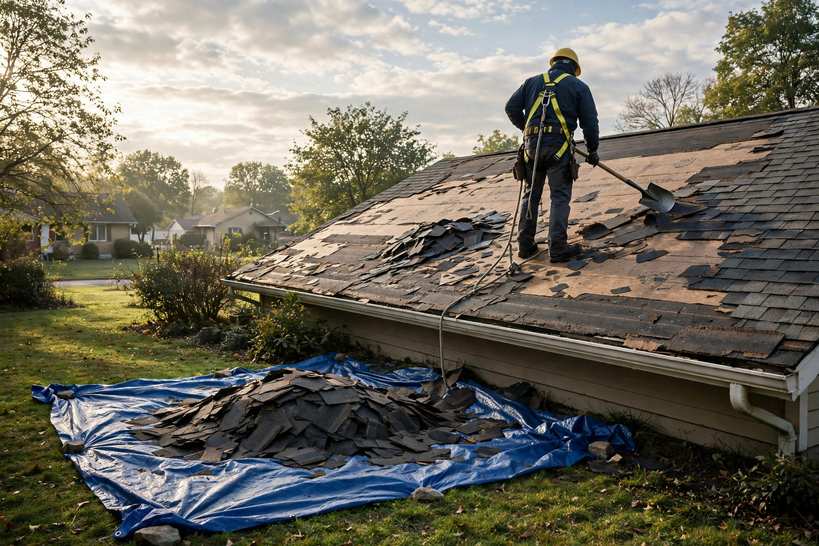
Old shingles go in the dumpster, the yard is magnet-swept, and the landscaping is checked for stray nails. The job is walked before leaving.
The approach is the same for a home and a business. What changes is the access, the schedule, and who needs the paperwork.
The whole roof is inspected after a storm, photos are shown, and what needs fixing is described in a written scope.
Membrane punctures and seam damage are inspected and patched, with records for the property file. Larger properties are described on the commercial roofing page.
A plain-language look at what storm repair involves and when it is needed.
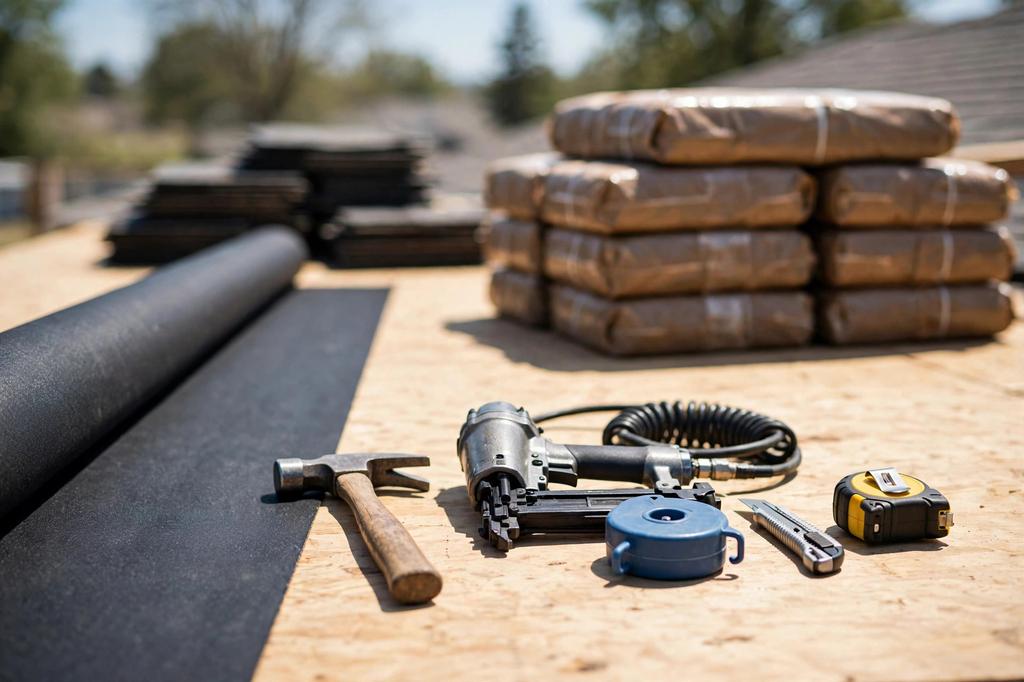
See how it worksStorm damage roof repair in Urbandale means restoring a roof after hail, wind, or falling debris has broken its weather seal. That means removing the damaged shingle field, checking the underlayment and ice barrier beneath it, replacing flashing the storm bent, and nailing new shingles to the manufacturer pattern. A moisture meter finds wet decking, a chalk line keeps courses straight, and the nail gun is set to the right depth so the next storm does not lift the edges.
Urbandale storm history in the research includes the July 15, 2024 EF1 tornado, recorded in a preliminary National Weather Service survey at 100–105 mph over a 7.23-mile path, and the August 10, 2020 derecho, which reached 75 mph at Des Moines airport. The wind damage post describes what to look for from the ground after a storm, and the leaking roof post covers the first steps when water is coming in.
After a storm, inspection and documentation come first, and a temporary cover is discussed where water is entering.
The sequence below runs from the first call to the final walk-through.
Call (641) 219-5108 and describe what is showing: a stain, missing shingles, a limb through the deck. Questions on the call shape what the inspection looks at first. This site makes no response-time promises.
The whole roof is walked, not just the slope of concern. Shingles are checked for hail hits and wind creasing, flashing around the chimney and skylights is looked at, and a moisture meter runs across the decking to find soft spots.
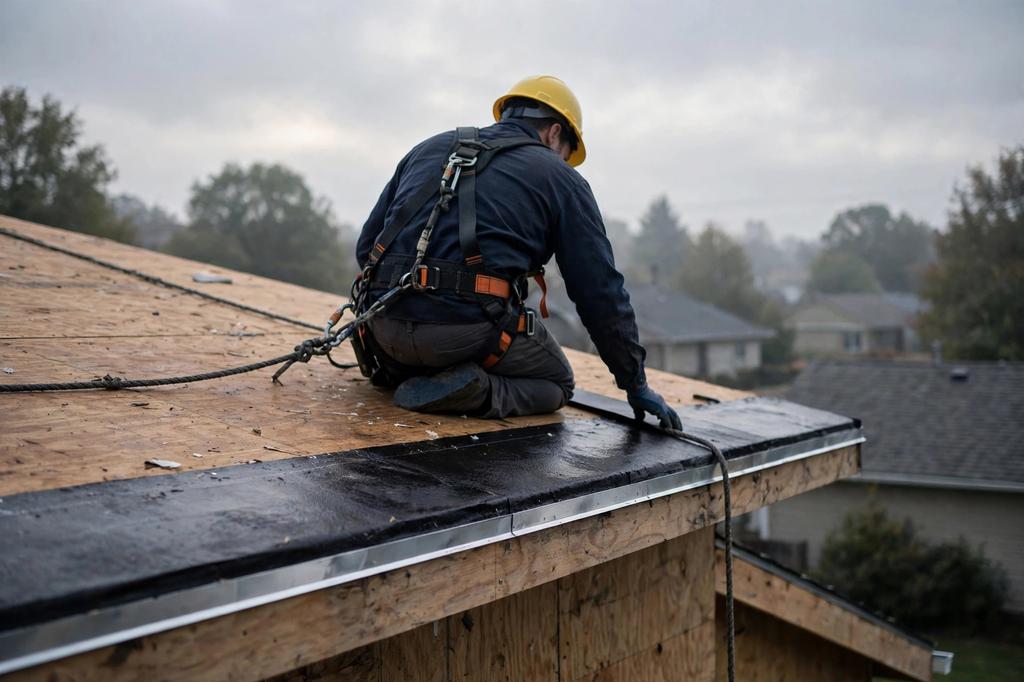
Photos of what was found are shown, and what needs fixing now is explained against what can wait. The written scope lists materials and steps, and questions are answered before anything is agreed.
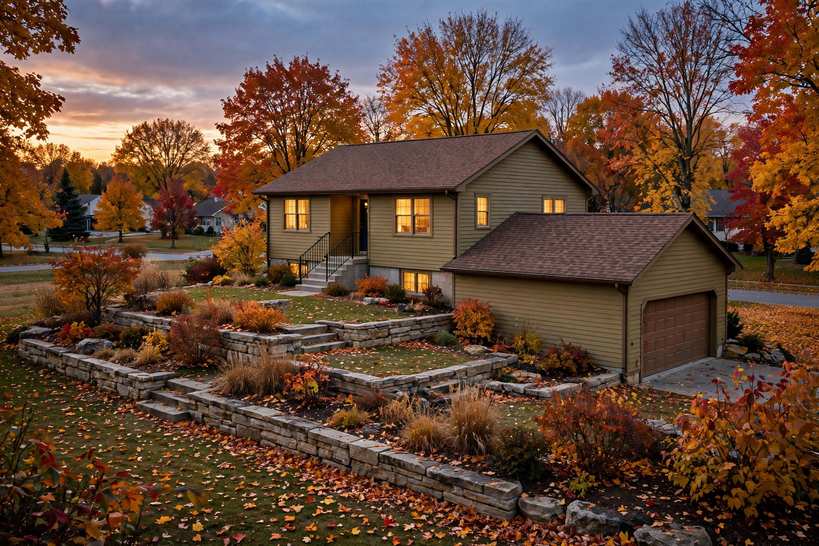
Landscaping is protected, the damaged section is torn off, damaged decking is replaced, and new shingles are nailed down. A temporary cover over an opening is discussed on the call where water is entering.
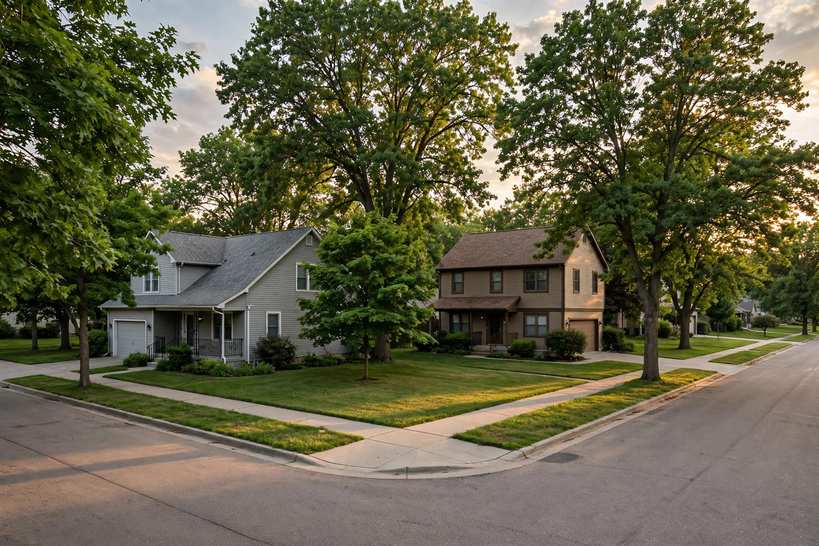
The yard is magnet-swept for nails, old shingles are hauled off, and the roof is walked one more time. Final photos and the job record go with the work.
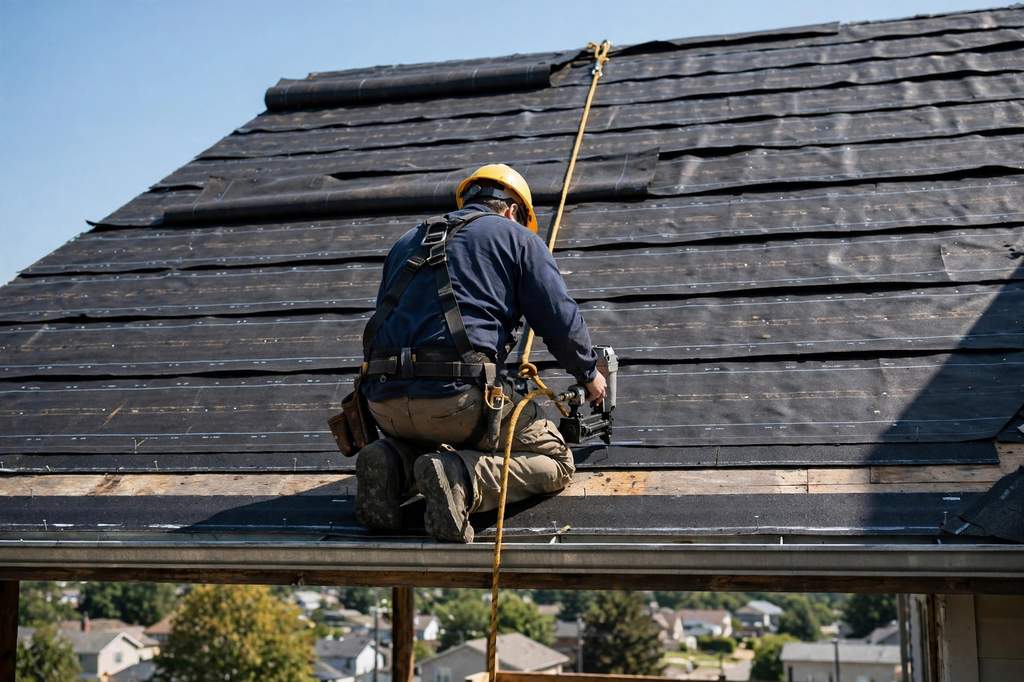
Move across a circle, or focus it and press Enter, for an illustrative thermal view of the photograph.

Finds wet decking and insulation behind the shingles so what is actually damaged is replaced instead of guessed at.

Sets nails to the manufacturer depth and pattern so the shingles hold through the next wind event.
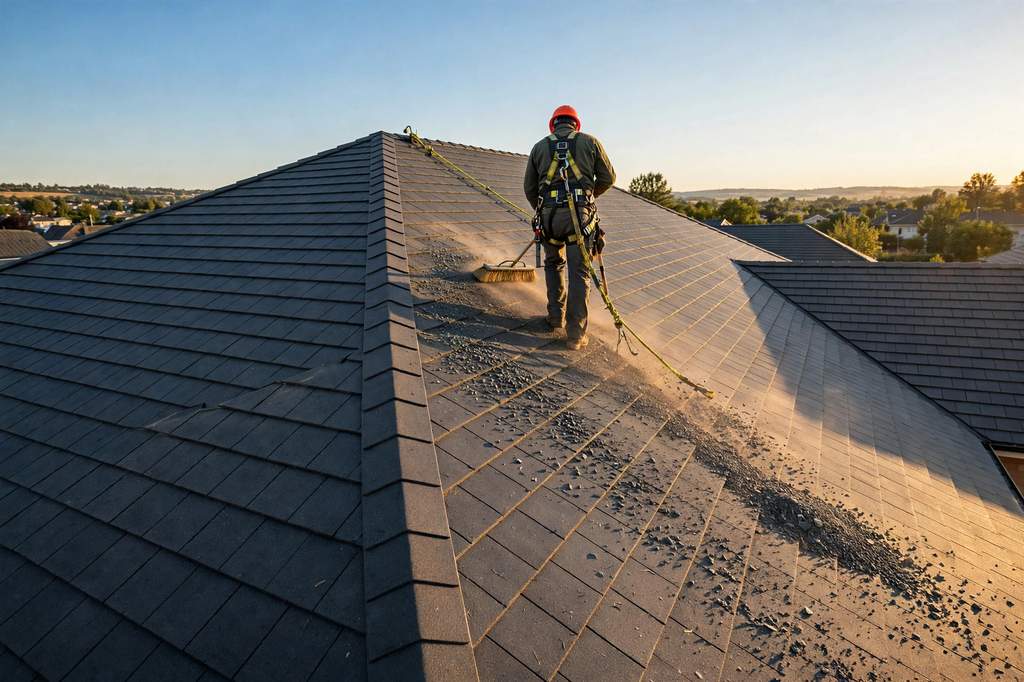
Keeps the new courses straight and the cuts clean so the repair sits alongside the rest of the roof.

Lifts old shingles without tearing the underlayment and sets new ones by hand where the nail gun cannot reach.
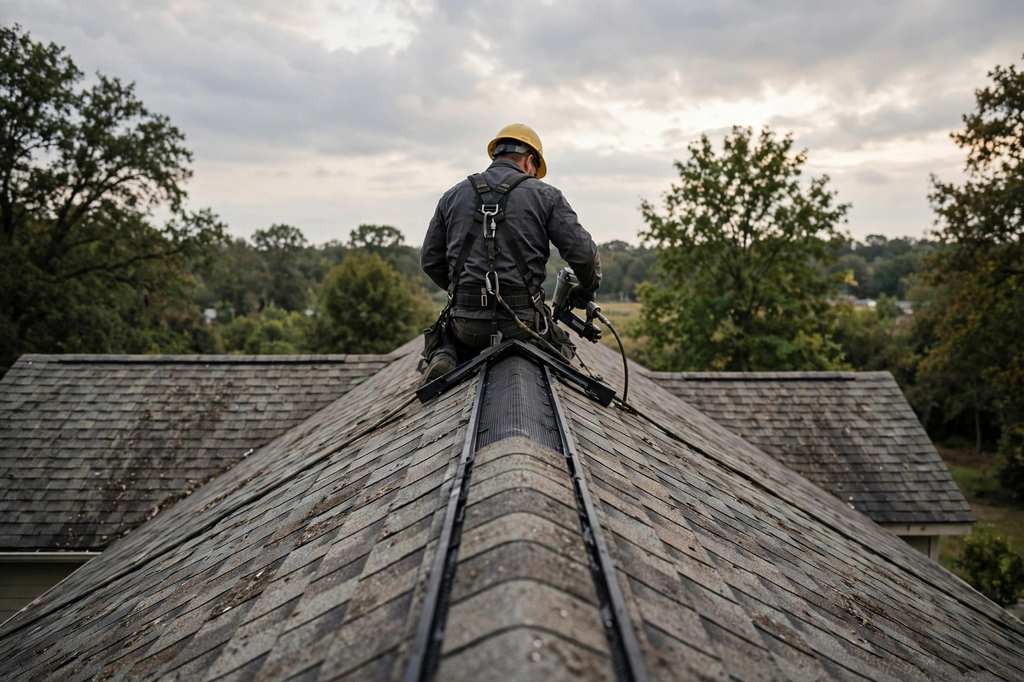
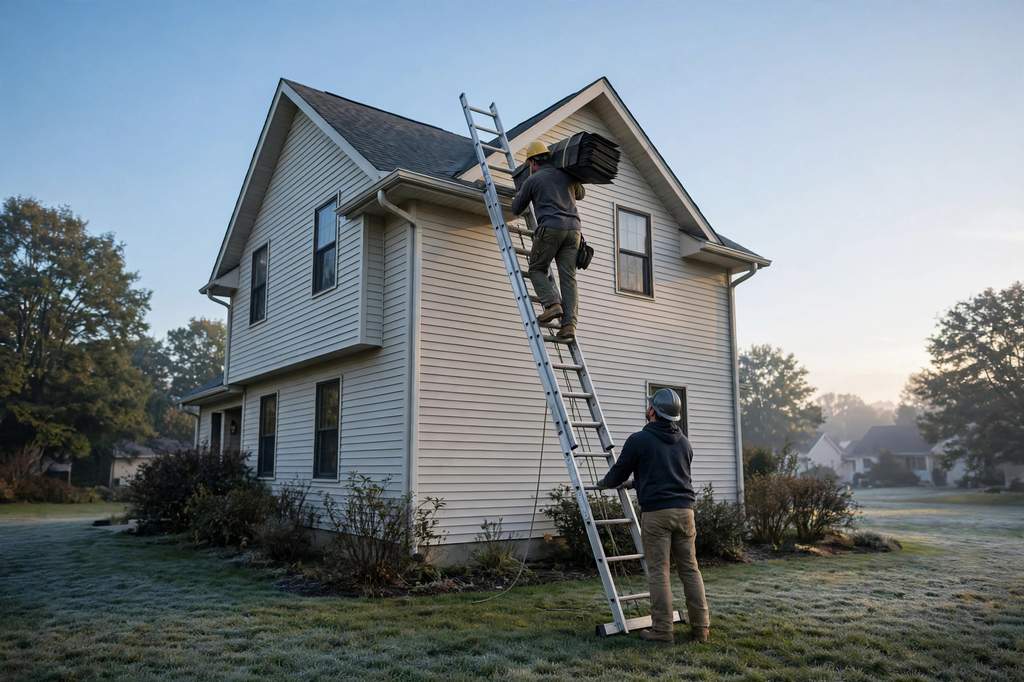
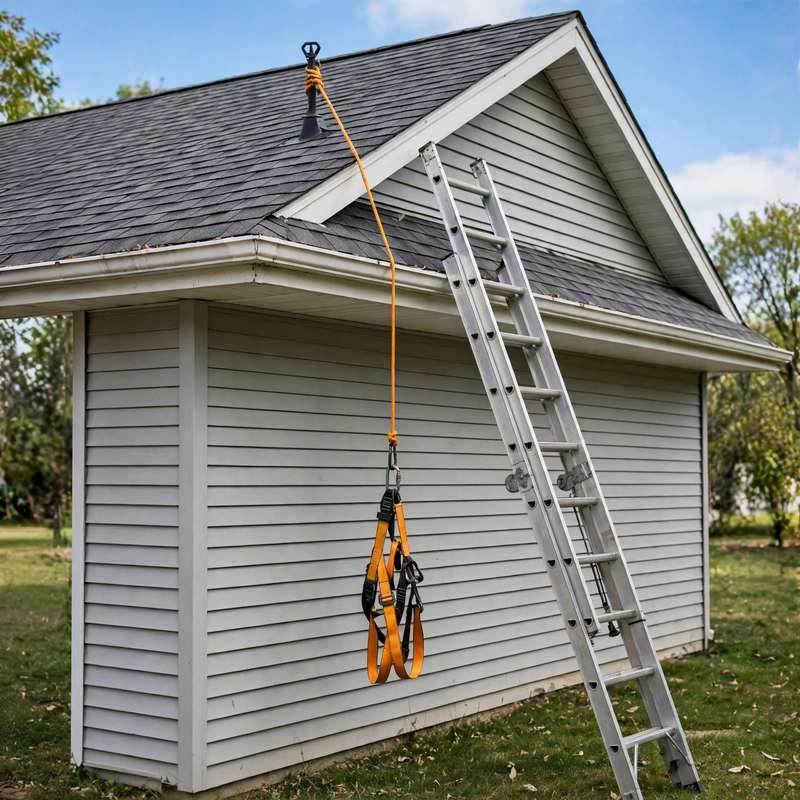
Harness and ladder setup for steep slopes, the ridge, and the valleys.
Thermal views are illustrative, generated from the photographs.
Clears the deck and the seams before new underlayment goes down so the seal is clean.
Replacement shingles, underlayment, and ventilation are selected to sit alongside the existing roof system. No product names are published on this site.
Ice barrier runs at the valleys, chimneys, and skylights, where storm water finds its way in first.
Every damaged slope and flashing point is photographed before anything comes off the roof, producing storm damage documentation for the homeowner's own records.

A spring hail event hits one slope, with granules in the gutter and a stain on the ceiling.
The roof is inspected for hail hits, the damage is photographed, and bruised shingles are replaced. Gutters and downspouts are checked and granules cleared so drainage works.
Outcome: The leak is addressed, and a photo file is kept for the homeowner's records.

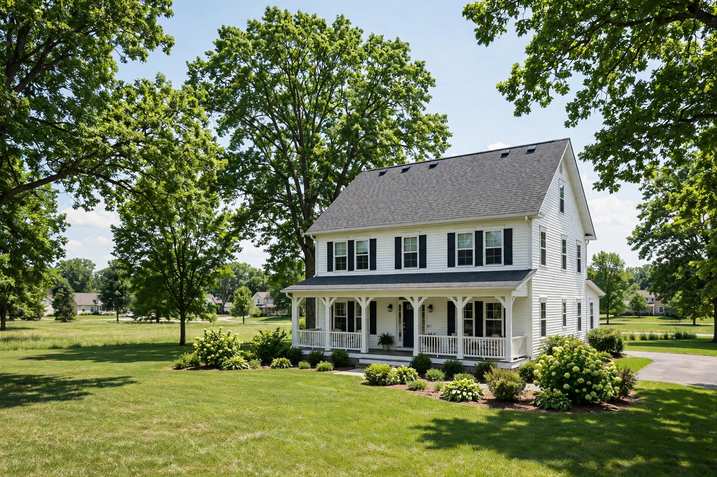
A straight-line wind event lifts shingles on the ridge and rake edge of a two-story home.
Open sections are discussed for a temporary cover, lifted shingles are replaced, and the ridge vent and rake flashing are checked. Nails follow the manufacturer pattern.
Outcome: The roof is sealed at the ridge, and the repair sits alongside the rest of the field.

A limb comes through the deck over a garage during a summer storm.
The opening is discussed for a temporary cover on the call, damaged decking is cut out and replaced with new sheathing, and new underlayment and shingles go down. The attic is checked for water damage.
Outcome: The hole is closed, the decking is solid, and the attic has been checked.
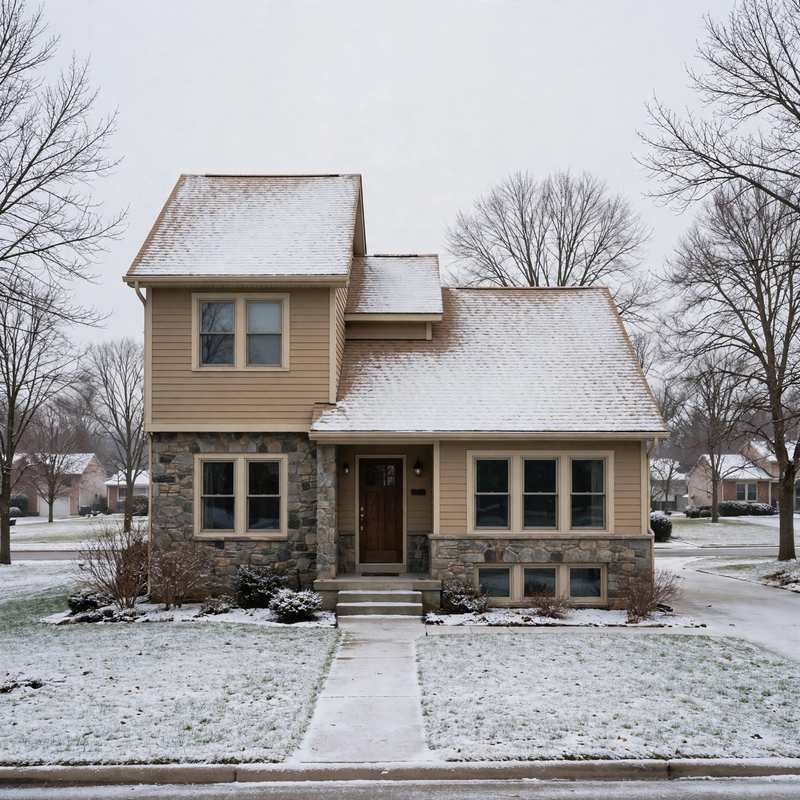
An ice dam in January backs water under the shingles and into the attic insulation.
The source is found with a moisture meter, flashing and shingle damage are repaired, and attic ventilation is checked as part of ice-dam prevention. Removal work is not offered on this site.
Outcome: The leak is addressed, and the attic ventilation question is described for prevention.
A commercial building takes hail on a membrane roof.
The membrane is inspected for punctures and seam damage, storm openings are patched, and drains are checked. Flat and low-slope systems are covered on the flat roofing page.
Outcome: The membrane is sealed and the drains are checked, with records for the property file.
Urbandale storm exposure in the research runs from the July 15, 2024 EF1 tornado, recorded in a preliminary National Weather Service survey, to the August 10, 2020 derecho. Hail figures in the research describe the Des Moines metro, not Urbandale itself: 100 hail days within 15 miles of Des Moines since 2010, with the largest at 3.25 inches in Beaverdale on July 9, 2021. The only Urbandale-named hail record found is 1-inch hail on March 14, 2025.
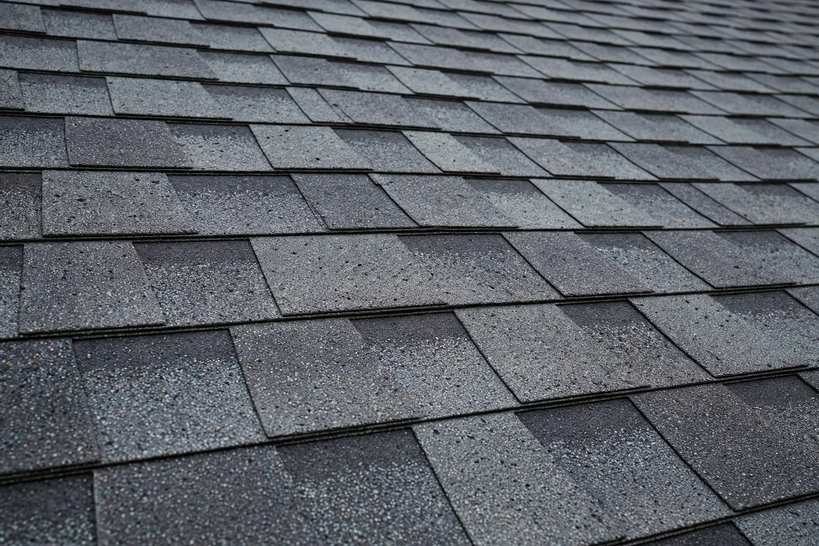
Older shingles tend to crack under hail while newer shingles bruise and lose granules (INFERRED from the general difference between aged and newer asphalt). Inspection looks for both, and for the flashing and ventilation details that shape how a roof sheds the next storm. No Urbandale-specific hail or wind climatology was found in the research, so this site states no frequency claims for local storms.
Documentation is the homeowner's own record: dated photos, measurements, and a written scope, kept for storm damage documentation for the insurer. This is general information, not legal or insurance advice — check your policy, agent, or carrier.
Before: A spring hail event bruised one slope and knocked granules into the gutters. A ceiling stain appeared, and it was unclear how far the damage reached.
After: Damaged shingles are replaced, gutters are cleared, and downspouts are flushed. The work is photographed, and the documentation is kept for the homeowner's own records.
Have the roof inspected after storm season, and keep gutters clear so granules and debris do not back up drainage.
Before: A straight-line wind event lifted shingles along the ridge and rake edge. The ridge vent was cracked and daylight showed in the attic.
After: Lifted shingles are replaced, a new ridge vent goes in, and rake flashing is resealed. The attic is checked again after the repair.
Check the ridge and rake edges after every wind event, and keep attic ventilation clear.
Before: A limb came through the deck over a garage during a summer storm and water came through the ceiling. The decking was soft around the opening.
After: The opening is covered temporarily, damaged decking is cut out and replaced with new sheathing, and new underlayment and shingles go down.
Trim back limbs that overhang the roof and check the decking around a repair after the next storm season.
Storm damage shows up in more ways than a missing shingle. The problems below are the ones inspection looks for after a storm.
Dry ceilings, a documented record, and a repair that sits alongside the existing roof.
Where water is entering, a temporary cover over the opening limits further water entry until lasting work is scoped. Whether and when a cover can be placed is discussed on the call — this site makes no timing promises.
Every damaged slope, hail hit, and piece of bent flashing is photographed before anything comes off the roof. The photo set, measurements, and written scope stay in the homeowner's own records as storm damage documentation for the insurer.
Replacement shingles are selected to sit alongside what is already on the roof. Where a color or line is no longer available, that is stated before work starts and the closest option is shown.
Decking replacement, ridge vent repair, and gutter and downspout work are described in the same written scope when the storm took those too.
Clear records to keep and share.
Every damaged slope and flashing point
Materials and steps listed
Photos and measurements for your records
What was replaced, and where
Not every storm-damaged roof needs a full replacement, and not every repair will hold.
One or two slopes damaged, decking solid
Widespread hail or wind damage, aged roof
Active leak, lasting repair to be scoped
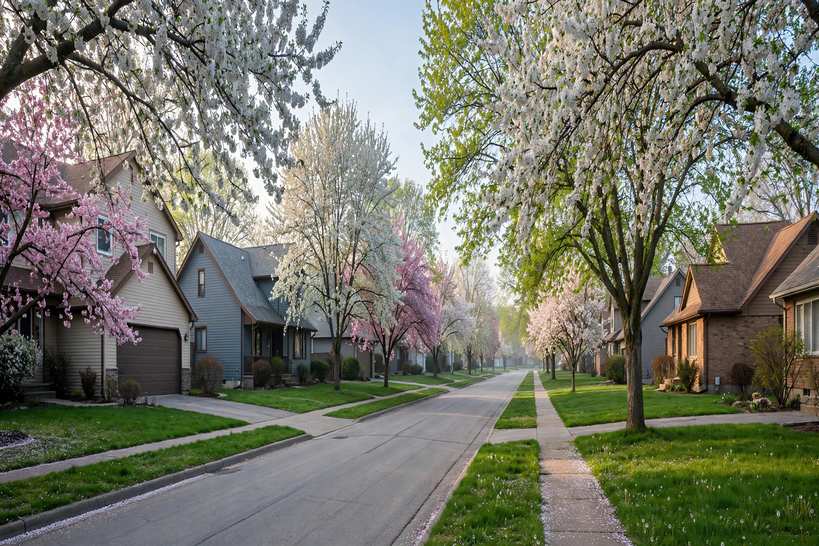
A mailing address can carry a neighboring city's name, and an Urbandale address can carry a neighboring ZIP code. A parcel record settles which city governs an address. Call and ask about a specific street.
The pages below hold roofing information for Urbandale plats and districts. Each page describes its area. Call and ask about a specific street.
Wind-lifted or creased shingles, hail bruising and granule loss, bent flashing, cracked vents, debris punctures, and granule piles at the downspouts. Damage is often uneven across slopes, so the whole roof is inspected, not just the slope facing the street.
Photograph the roof from the ground, any ceiling stains, and granule piles or dented gutters, and note the date and time of the storm. Keep the photos and notes as storm damage documentation for your insurer, in your own records. This is general information, not legal or insurance advice — check your policy, agent, or carrier.
Yes. This hub page covers wind damage alongside hail and debris damage: lifted and creased shingles, ridge and rake damage, and the local storm record, including the preliminary July 15, 2024 EF1 survey and the August 10, 2020 derecho. There is no separate wind page.
No. This site describes how to document damage so a homeowner can keep a record for their own claim process. Coverage, deadlines, and claim decisions sit with the policy, the agent, and the carrier — check those directly. This is general information, not legal or insurance advice.
Related pages from the services list.
Call Rocc Solid Construction at (641) 219-5108 to describe the damage and ask about inspection and documentation. The listed hours are Open 24 hours, every day.
Call (641) 219-5108 to talk about a roofing question. The office is at 3815 109th St, Urbandale, IA 50322, United States, and the listed hours are Open 24 hours, every day.